


Volotea: What is the latest news about the airline Volotea?
Souleymane Enok
Since the beginning of 2026, the Spanish low-cost airline Volotea has distinguished itself with an ambitious expansion strategy, focused on strengthening its European network and consolidating its bases in France and beyond. Very active on the new routes front, the airline has recently announced several significant developments that reflect its desire to boost regional and international connectivity.
Volotea has made official the opening of a new base at Montpellier-Méditerranée airport, which will become its 11th French base starting in the autumn of 2026, with the introduction of four new connections to popular destinations such as Bordeaux, Madrid, Tenerife South, and Lanzarote. This expansion is accompanied by the deployment of an Airbus A320 and the creation of local jobs, demonstrating the airline's lasting roots in the South of France.
At the same time, Volotea is further strengthening its network with the expected opening of a 12th base in Limoges in February 2026, marking an important milestone for the airline in Central-Western France and the launch of new routes, including Paris-Orly, which meet the mobility needs of less-served territories.
In terms of routes, Volotea has also confirmed the resumption of the Brive–Porto route, providing two weekly flights year-round, following Ryanair's withdrawal from this path. This initiative helps maintain a strategic direct connection between the South-West of France and Portugal, which is highly appreciated by both leisure travelers and the diaspora.
Finally, the airline is already offering its flight schedule for the 2026-2027 winter season for sale, giving travelers the opportunity to book getaways to the Canary Islands and other European destinations, a move that illustrates Volotea's desire to offer an increasingly diversified and proactive selection.
In this article, we offer a complete overview of the latest Volotea news in 2026: new bases, routes, international connections, and the development strategy shaping the future of this low-cost airline.
Volotea in 2026: development of bases and network strengthening
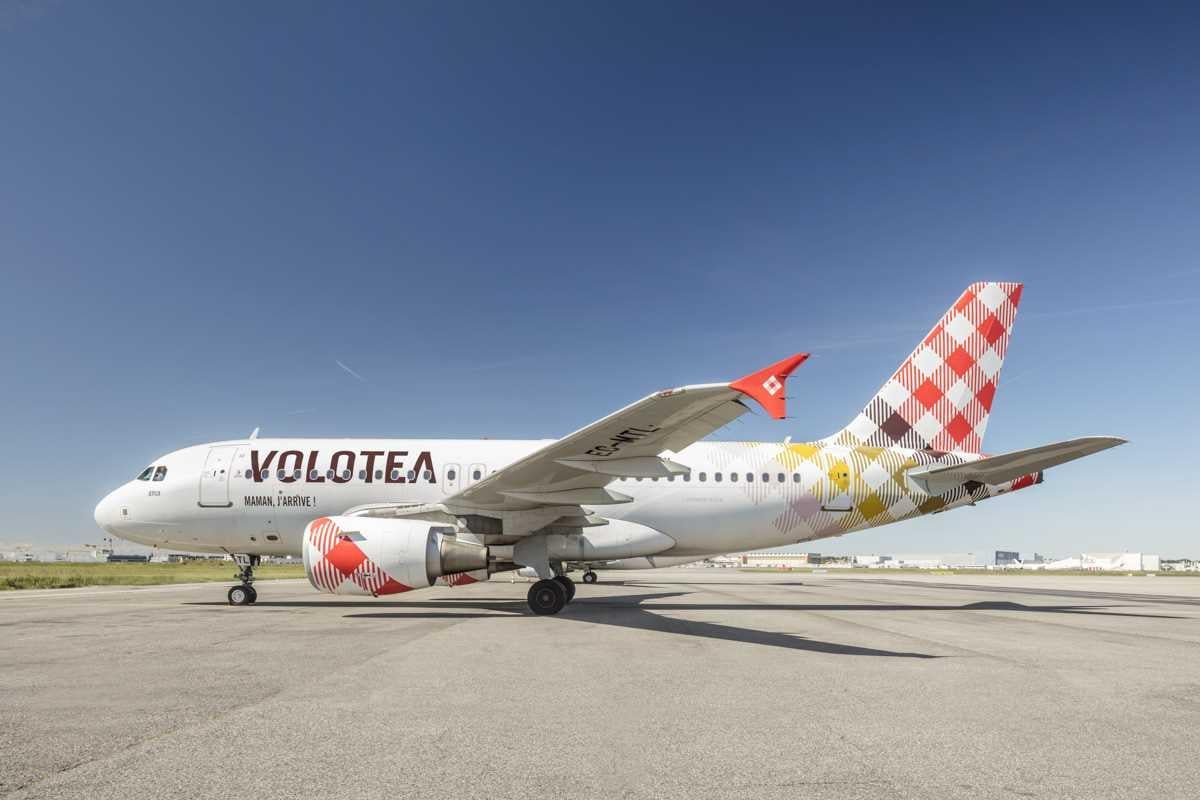

In 2026, Volotea is pursuing a clear strategy: strengthening its presence in European regional airports and consolidating its positioning as a specialist in direct connections between secondary cities. Unlike large groups that concentrate their operations on international hubs, Volotea focuses on regional connectivity, a niche that has become strategic.
A structured expansion of French bases
France currently represents a central pillar of Volotea's development. In 2026, the airline continues to invest heavily in the territory with the opening and strengthening of several regional bases.
The objective is twofold:
- Consolidating its presence in medium-sized cities with high potential
- Offering direct flights without connections to attractive European destinations
This strategy allows Volotea to capture a leisure clientele that wishes to avoid saturated major hubs such as Paris-CDG or Lyon-Saint-Exupéry.
The strengthening of bases is generally accompanied by:
- Parking one or more Airbus A320s
- The creation of local jobs
- The opening of new seasonal and annual routes
This model offers operational stability while maintaining seasonal flexibility.
Specialization in direct regional routes
One of Volotea's major strategic axes in 2026 remains the direct connection between secondary European cities. The airline avoids direct competition with major low-cost carriers on mega-international routes.
Its positioning is based on:
- Direct flights without connections
- A strong presence towards Spain, Italy, and Greece
- Services to islands (Balearics, Canaries, Corsica, Sardinia)
This specialization meets a growing demand from travelers seeking simplicity and speed.
A network with controlled growth
Unlike massive and risky expansion, Volotea adopts a progressive approach. In 2026, the airline is strengthening:
- Summer routes with high demand
- Strategic year-round routes
- Tourist destinations with high seasonal value
This strategy optimizes the load factor and limits losses during off-peak periods.
The hybrid seasonal/annual model also offers better adaptation to market variations.
The importance of sunshine destinations
The development of the network in 2026 places a strong emphasis on Mediterranean and Atlantic destinations:
- Canary Islands
- Balearic Islands
- Southern Italy
- Portugal
- Greece
These routes represent a significant engine for growth, especially in winter when demand for sunshine remains high.
A strategy focused on regional profitability
The strengthening of bases allows Volotea to:
- Reduce costs related to rotations
- Optimize crew scheduling
- Improve punctuality
By consolidating its network around stable bases, the airline secures its profitability while maintaining competitive rates.
A distinct positioning against low-cost giants
Faced with players like Ryanair or easyJet, Volotea does not seek to dominate major European capitals. It favors a dense and targeted regional mesh.
This strategy allows it to:
- Reduce direct competition
- Build local customer loyalty
- Develop strong partnerships with regional airports


Offer ⚡: Take advantage of promotions on our selection of cabin luggage with the code TRAVEL10. Free delivery and satisfaction guaranteed!

Volotea in 2026: fleet modernization and environmental strategy
In 2026, Volotea is pursuing a dual strategic objective: modernizing its fleet while accelerating its environmental transition. In a context where airlines must reconcile profitability with the reduction of their carbon footprint, Volotea is gradually adapting its operational model.
A fleet refocused around the Airbus A320
In recent years, Volotea has initiated a gradual transformation of its fleet. Historically composed in part of Airbus A319s, the airline is now strengthening the presence of the Airbus A320, a more spacious and higher-performing aircraft.
The advantages of the A320 are numerous:
- Better energy efficiency per seat
- Higher capacity (reduction of costs per passenger)
- Optimization of rotations
- Technical standardization facilitating maintenance
In 2026, this harmonization allows Volotea to reduce its operational costs while improving the passenger experience.
Reduction of fuel consumption
The modernization of the fleet is part of a clear logic: reducing fuel consumption per transported passenger. The most recent aircraft offer better aerodynamic performance and engine optimization.
Even though Volotea does not yet exclusively have the latest generation of Airbus (like the A320neo), the rationalization of the fleet is already contributing to a significant improvement in its energy efficiency.
A progressive environmental strategy
Like the entire European aviation sector, Volotea must adapt to new climate and regulatory requirements. In 2026, the environmental strategy relies mainly on:
- Optimizing flight paths
- Reducing weight on board
- Improving the load factor
- Gradual use of sustainable aviation fuels (SAF)
Improving the load factor is a key lever: a fuller plane reduces the carbon footprint per passenger.
Optimization of ground operations
The environmental strategy is not limited to flight. Volotea also works on:
- Reducing energy consumption in bases
- Optimizing boarding procedures
- Digitization of documents
These measures, while less visible, contribute to the global decarbonization effort.
European regulatory pressure
In 2026, the European framework is evolving rapidly. The Emissions Trading System (ETS) and the gradual integration of sustainable fuels are forcing airlines to anticipate additional costs.
Volotea, positioned on European regional routes, must integrate these constraints into its business model while maintaining competitive rates.
A balance between growth and responsibility
The main challenge for Volotea consists of reconciling:
- Network expansion
- Low-cost profitability
- Reduction of environmental footprint
The modernization of the fleet constitutes a pragmatic response to this complex balance.
A responsible positioning against the competition
Faced with players like Ryanair and easyJet, the ecological transition is also becoming a competitiveness argument. Travelers are increasingly sensitive to airlines' environmental commitments.
By gradually improving its fleet and processes, Volotea seeks to maintain its growth while embracing a more sustainable dynamic.
Volotea facing competition in 2026: what are the challenges and outlook?
In 2026, Volotea is operating in a particularly competitive aviation environment. The European market is dominated by powerful low-cost players like Ryanair and easyJet, while legacy carriers are strengthening their attractive pricing offers on short- and medium-haul routes. In this context, Volotea must consolidate its positioning to sustain its growth.
A differentiated positioning in secondary cities
Volotea's main strategic asset remains its specialization in direct connections between European secondary cities. Where Ryanair and easyJet often prioritize major hubs or large airports, Volotea is developing a targeted regional network.
This strategy allows the company to:
- Avoid systematic head-on competition
- Build local customer loyalty
- Benefit from the support of regional airports
However, this niche can also become a challenge if major players decide to enter certain profitable routes.
Pressure on margins and rising costs
In 2026, airlines are facing several pressure factors:
- Rising fuel costs
- European environmental requirements
- General inflation of operating costs
For a low-cost carrier like Volotea, managing margins is becoming strategic. Maintaining competitive prices while absorbing cost increases is a delicate balancing act.
Increased competition in the leisure segment
The leisure segment, Volotea’s core target, is attracting more and more players. Sun destinations (Spain, Italy, Greece, Portugal) are highly contested, especially during the summer season.
Differentiation then relies on:
- Flight frequency
- Service quality
- Operational reliability
- Route relevance
Punctuality and customer experience are becoming key drivers of loyalty.
Adapting to new traveler expectations
European travelers in 2026 are more attentive to:
- Price transparency
- Environmental commitments
- Ticket flexibility
Volotea must therefore reconcile its low-cost model with an enhanced customer experience. Fleet modernization and operational optimization contribute to this dynamic.
Prospects for controlled growth
Despite these challenges, the outlook remains favorable. Demand for direct regional flights remains strong, particularly in territories less well-served by major airlines.
The gradual development of regional bases and the consolidation of the European network allow Volotea to secure its model.
The company's cautious and targeted approach rather than massive expansion constitutes a strategic advantage in a volatile market.
A future dependent on strategic balance
The future of Volotea in 2026 will depend on its ability to:
- Maintain a differentiated network
- Control its costs
- Adapt its offering to regulatory changes
- Preserve customer satisfaction
In a strained European airline market, regional specialization remains its primary lever for resilience.


COMMENTAIRES